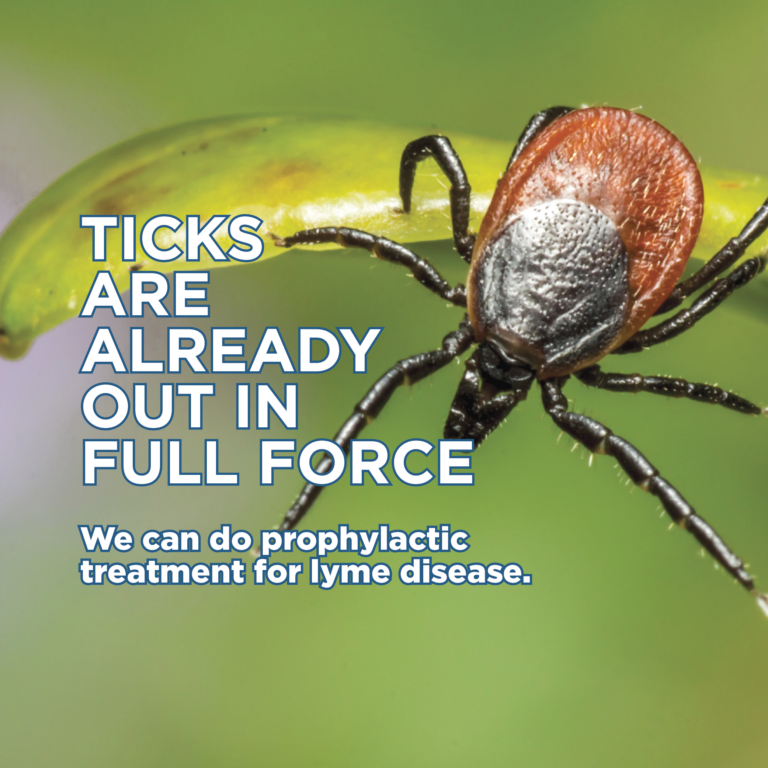
Now that Summer has arrived in the Brainerd Lakes Area, tick disease season is upon us. We encourage patients and residents of the area to be vigilant with daily tick checks, especially following outdoor activities. Wear long pants when walking in wooded areas and use insect repellant to help prevent ticks from attaching to your body.
Do you know the difference between a deer and dog (aka wood) tick?
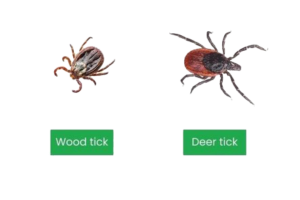
Deer ticks have black legs and are small with a 2 toned body. They carry Lyme Disease and other diseases, such as anaplasmosis and babesiosis. It is important to remove the tick immediately after it is found on the body. Use tweezers and pull upward with a steady pressure. Wash the area with rubbing alcohol, soap, and water following removal of the tick. If you suspect a portion of the tick remains, seek medical attention.
If the tick is identified as a deer tick, the CDC recommends post exposure prophylaxis (PEP) with doxycycline for people living in an area where Lyme Disease is common. Minnesota is one of the states where PEP is recommended following the removal of a deer tick that is engorged or was attached for more than 36 hours. It is important to take the doxycycline within 72 hours of removing the deer tick to prevent transmission of Lyme Disease. PEP is 87-91% effective in preventing Lyme Disease when taken appropriately.
In many instances, the deer ticks are small, and people are unaware of the presence of one. Signs of Lyme Disease after a tick bite include fever, body aches, rash, neck pain, joint pain, and headache. You should see a doctor for a tick bite within 3 days of removing an engorged deer tick or if you have symptoms of Lyme Disease. PEP and early treatment of Lyme Disease are important to prevent disease progression. Most patients feel better within 48 hours of starting doxycycline.
For more information visit: Tick Bite: What to Do