25% of ANY IV Service in the Month of April!

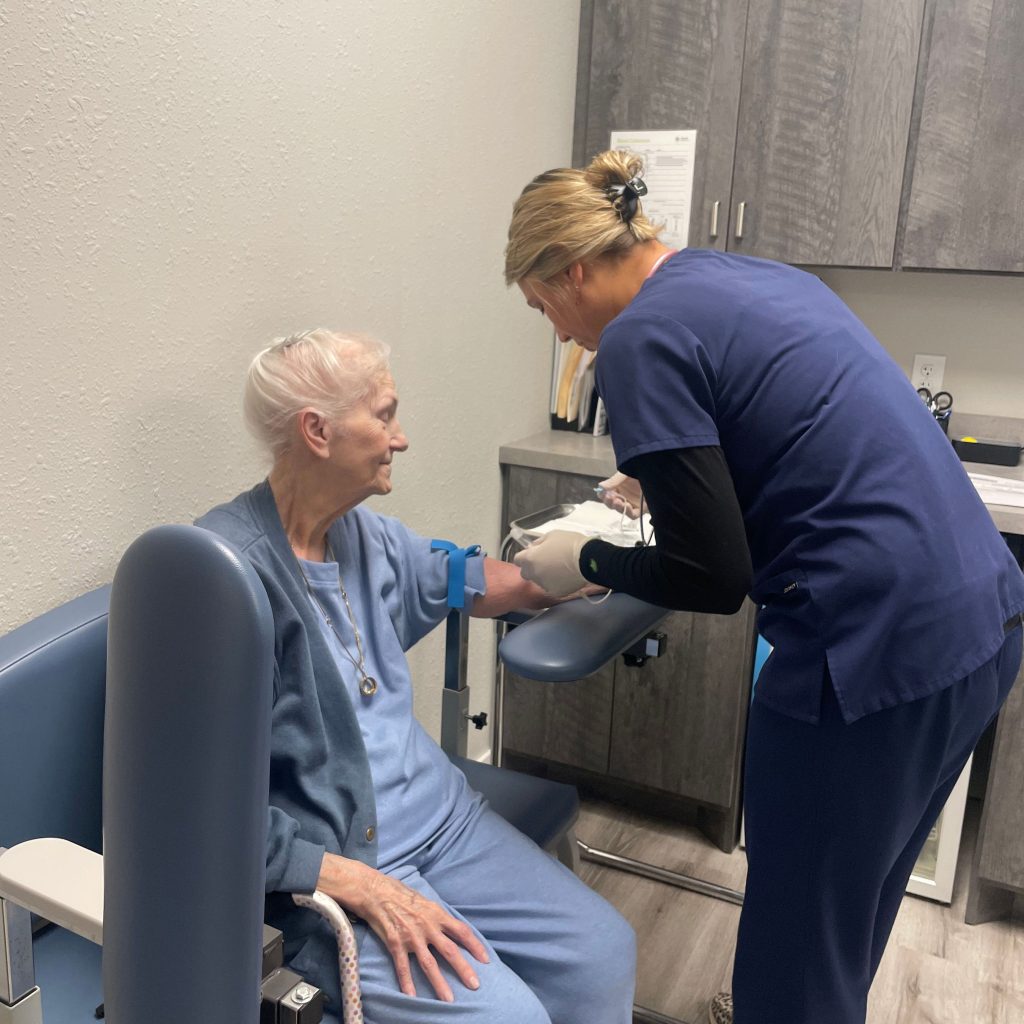
Phlebotomy originates from the Greek words phlebos, meaning veins and tomos, meaning to cut. Phlebotomy refers to any procedure that involves cutting the vein to remove blood.
Most people associate phlebotomies with drawing blood for testing, but it can also be done therapeutically to improve a patient’s condition and treat diseases.
Therapeutic phlebotomy (or therapeutic bleeding) is a procedure that reduces the number of red blood cells or excessive iron in your body by removing whole blood.
While red blood cells are responsible for carrying oxygen to all parts of your body, too many of them can cause thickened blood (increased viscosity) with slow blood flow. This can result in reduced oxygen delivery to body tissues and increased blood clots. Too much iron in the blood causes a toxic overload which can lead to organ damage, joint pain, and long-term health concerns.
Simple! Schedule an appointment online, or give us a call today to see if we can help you.